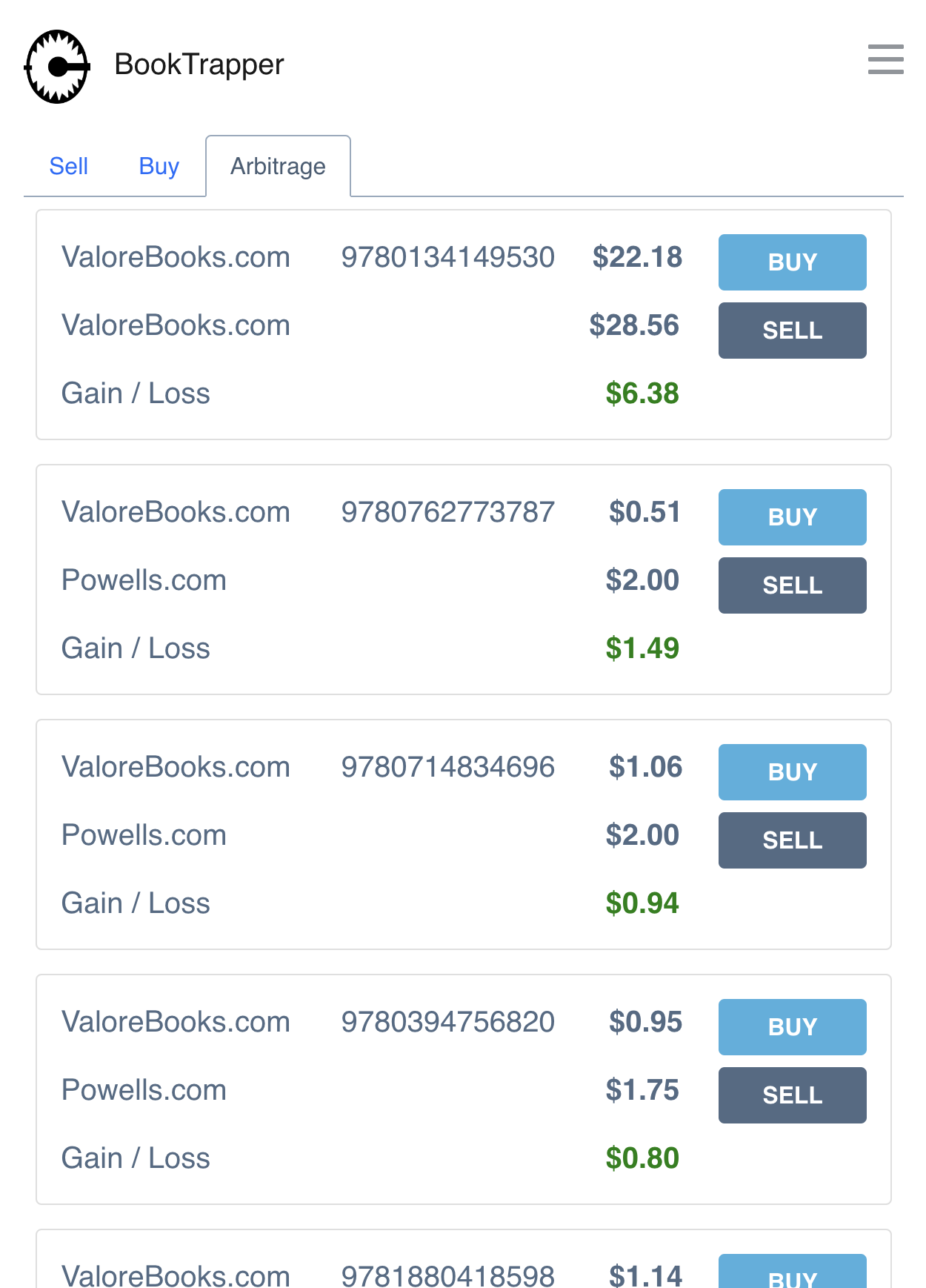
A positive number on a comparison screen is a lead, not guaranteed profit. A durable flip has enough room for acquisition cost, taxes, shipping, condition risk, price movement, and the time required to receive and resell the book.
What textbook arbitrage actually measures
The basic spread is the expected sell value minus the cost to acquire the exact ISBN. The useful calculation goes further: subtract every cost that must occur before the payout reaches you. If the remaining margin is thin, one revised quote or rejected condition can erase it.
A safer working formula
Expected payout − purchase price − taxes − shipping and fees − risk buffer = potential profit.
Find a spread wide enough to survive
Start with the lowest realistic acquisition price and the strongest eligible buyback offer. Then verify that both sides refer to the same edition and format. Hardcover, paperback, loose-leaf, international, instructor, and access-code editions may have different eligibility.
- Leave room for an offer to change before the book arrives.
- Account for purchase tax and any shipping that is not prepaid.
- Avoid relying on supplements or access codes unless the vendor explicitly accepts them.
- Prefer clear condition rules over a slightly higher but uncertain quote.
Where resellers find possible flips
Common sourcing locations include thrift stores, library sales, estate sales, campus move-out piles, wholesale lots, and online listings. The location matters less than the discipline: identify the exact ISBN, inspect the copy, and compare before purchasing.
Fast scanning helps you review more books, but speed should not replace inspection. Check for water damage, missing pages, broken bindings, heavy writing, and labels that obscure edition information.
A repeatable arbitrage workflow
- Search or scan the ISBN before buying the book.
- Confirm the title, edition, binding, and included materials.
- Compare acquisition cost with the available sell offers.
- Read the intended vendor's condition, minimum, and shipping rules.
- Apply a risk buffer and buy only when the remaining margin is worthwhile.
- Recheck the quote before creating the buyback order and shipping.
Treat apparent profit as provisional
Buyback vendors purchase according to current inventory needs. Quotes can fall or disappear, and a vendor can revise a payout after inspecting the book. Avoid spending money you cannot afford to have tied up, and track actual results so your future margin requirements reflect experience rather than optimism.
Do not confuse price ranking with endorsement
BookTrapper ranks offers by price. You are responsible for deciding whether the vendor's terms, support, timing, and condition policy fit the transaction.